If you need to rekey or replace locks after moving into a Houston home, start by looking at how each existing lock works. Rekeying is often the right choice when the lock is in good shape and you only need old keys to stop working. Replace a lock when it is damaged, unreliable, poorly fitted, or you want different hardware.
The ALOA Security Professionals Association says new owners should rekey as soon as possible after taking possession. Sellers may turn over their keys, yet copies may still be with former residents, relatives, contractors, cleaners, or neighbors.
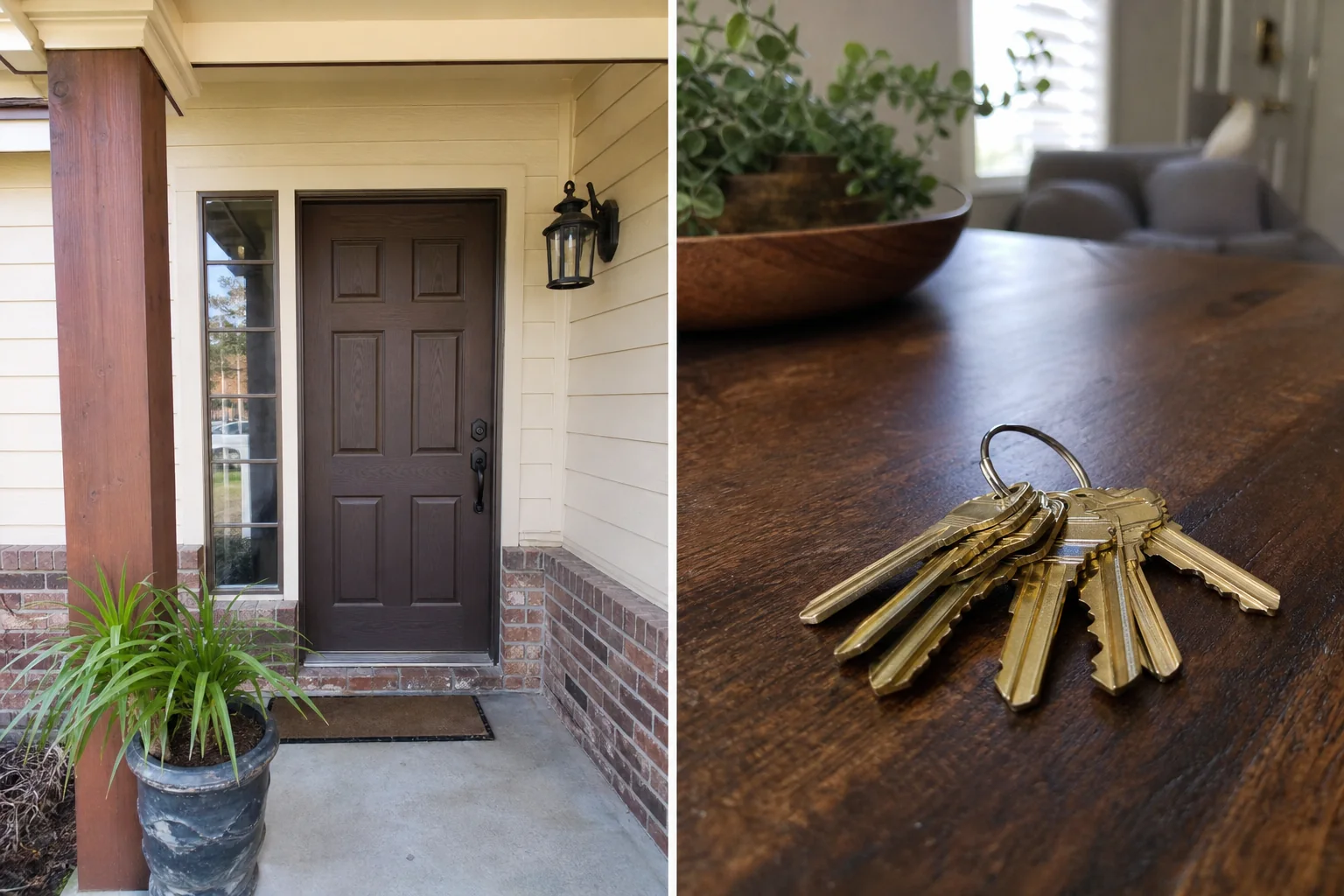
Rekey or replace locks based on what the door needs
Both choices can give you control over who can use a key now. The difference is what changes.
| Choose rekeying when | Choose replacement when |
|---|---|
| The lock works smoothly and is firmly mounted. | The latch, bolt, key, knob, lever, or deadbolt does not work reliably. |
| You like the current hardware and finish. | The hardware is worn, damaged, loose, corroded, or badly installed. |
| Your main goal is making unknown old keys stop working. | You want a different style, finish, lock type, or smart-lock setup. |
| The lock can accept a new key setup that fits your plan. | You need hardware that better fits the door or frame. |
Rekeying changes the small key-reading parts inside the lock cylinder. The outside hardware stays on the door, but the old key no longer matches the changed cylinder. A new key is made for the new setup.
Replacement removes the current lock hardware and installs different hardware. It can solve a worn-lock problem or support a change you cannot get from rekeying alone. A locksmith needs to inspect the door and lock before confirming which choice fits.
Make a move-in list before you schedule service
Walk the property once in daylight. Do not limit the check to the front door. A key control plan works best when it includes every entrance and other lock that gives access to the home or a protected area.
Check each place that can lead inside
- Front, back, and side entry doors
- The door between the garage and house
- Any exterior garage service door
- Patio, balcony, or sliding-door locks
- Side gates that protect a yard, pool area, or equipment
- Detached garage, shed, or storage-room locks
- Mailbox or community access locks if those are your responsibility
Write down which doors use the same key and which need separate keys. Also note locks that stick, need a hard push or pull to latch, feel loose, or show visible damage. These notes help separate a simple key-control need from a hardware problem.
Keep every key you received in one place until the work is done. Count keys, garage remotes, gate remotes, and key fobs. If a key has no clear label, mark where it was found rather than guessing what it opens.
Choose rekeying when the hardware is still worth keeping
Rekeying can be a practical move-in choice if the existing deadbolt and door lock operate properly. You retain the installed hardware while changing which key operates it. It is useful when your concern is unknown copies of the prior key.
Ask whether the locks you want changed can be keyed alike. Keyed alike means a single new key works with multiple compatible locks. That may reduce the number of keys you carry, though it depends on the lock types already installed and the key setup you choose.
Do not treat a working key as proof that the whole lock is in good condition. Test the lock with the door open and closed. The latch or deadbolt should move without forcing the key or twisting the thumb turn hard. A door that has shifted or a strike plate that does not line up may need attention before a lock change will work well.
For a direct next step, Mobile Locksmith offers residential lock rekeying in Houston. Have your move-in list ready and ask which locks can be changed to the same key.
Replace locks when the problem is the hardware
Replacement makes sense when a lock is not dependable, does not fit the door well, or no longer fits how you want to use the home. A new key will not repair a bent latch, a damaged deadbolt, a loose lock body, or a door that will not latch correctly.
Signs replacement deserves a closer look
- The key is hard to insert, turn, or remove after basic door alignment is checked.
- The deadbolt will not extend fully into the frame when the door is closed.
- Parts are missing, cracked, heavily worn, or loose on the door.
- The lock has visible damage after a break-in attempt or another impact.
- You want to switch from a knob lock to a deadbolt arrangement, change finishes, or install a smart lock.
If you are choosing new mechanical hardware, look for clear testing information. BHMA Certified Secure Home explains that its certified residential locksets and deadbolts are tested for security, durability, and finish. A product without a third-party certification label is not assured to have that testing. Certification is one factor to weigh with door condition, fit, and the features you need.
Smart locks need a separate check before purchase. Confirm the door thickness, backset, bolt setup, handing, power needs, app or hub requirements, and any HOA, warranty, or smart-home rules that apply. If you rent any part of the property or live under a community rule, check what changes need approval first.
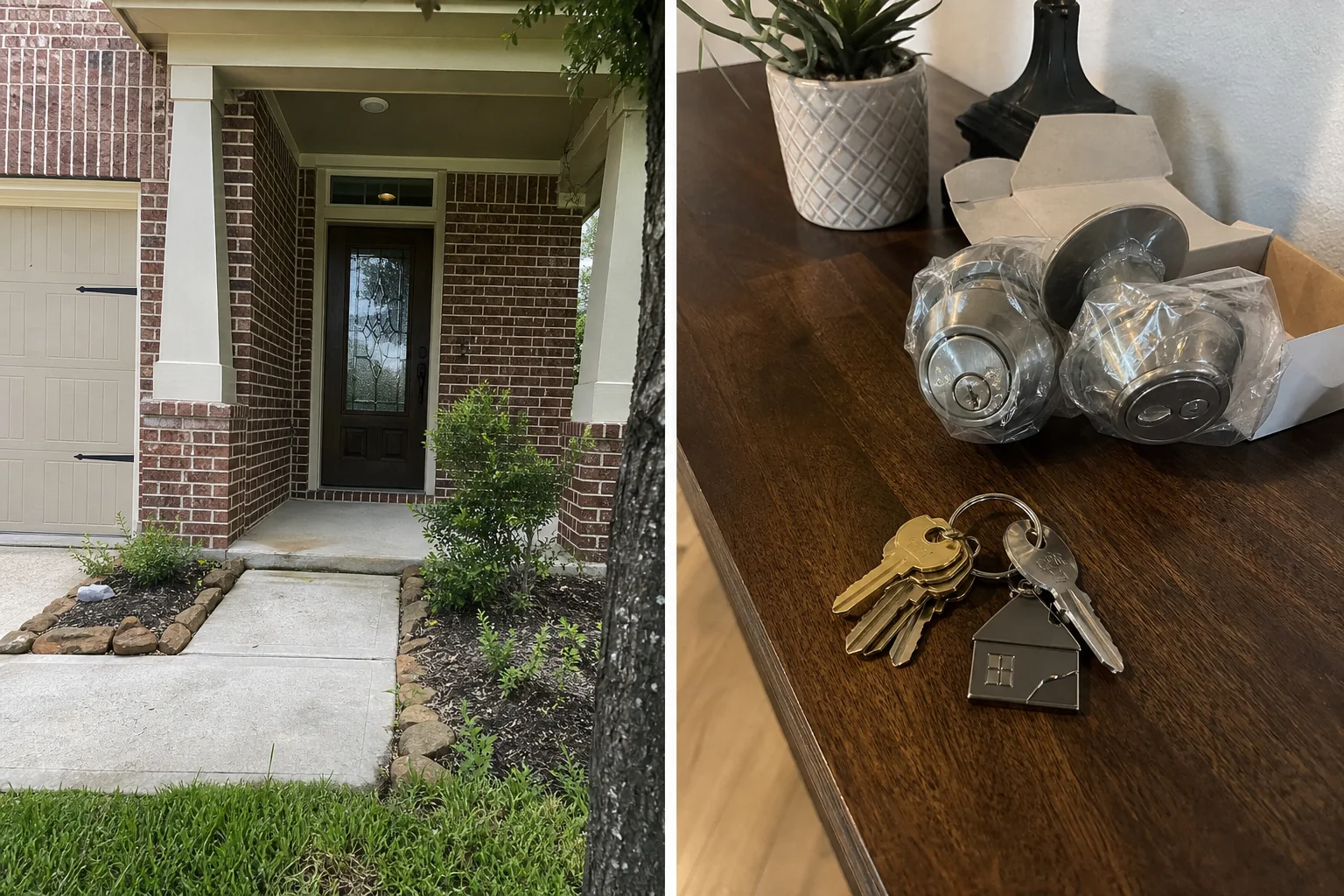
Do not overlook doors around the garage and yard
Move-in lock decisions often miss doors that are less visible from the street. The door from an attached garage into the home deserves the same check as the main entry. So do exterior garage doors, side gates, and detached storage structures that hold tools or equipment.
These locks may not all use the same kind of key or cylinder. A gate padlock, a garage service-door deadbolt, and an entry-door lever may need separate decisions. List them before service begins so you can decide whether convenience from fewer keys matters more than keeping certain areas on different keys.
Also check who can use non-key access devices. Change any keypad code you control, remove prior users from a smart-lock app when you have account access, and reset or reprogram devices only by following the manufacturer instructions. Keep your new codes and account recovery details private.
Prepare for a locksmith visit without losing access
Plan the work before boxes block doors or you hand spare keys to friends. Be ready to show that you have the right to authorize work at the home. Your closing papers, lease, or other proof may help if requested.
- Make the full list of locks, keys, remotes, and access codes.
- Mark locks that are hard to use or damaged.
- Decide which adults need keys and whether you want matching keys where possible.
- Set aside keys you do not recognize for the locksmith to review.
- After the work, test each new key at every assigned door while you are still outside and inside the home.
Texas treats locksmith work as a regulated individual license type. The Texas Department of Public Safety lists locksmith licensing requirements, including affiliation with a company or entity licensed by the department. You can ask the provider about licensing before authorizing the work.
Questions new homeowners often ask
Can I rekey every lock in my house to one key?
Maybe. Locks must be compatible with a shared key setup. Different brands, cylinder types, keyways, or specialty locks may prevent it. A locksmith can identify which locks can match and which should remain on separate keys.
Should I change locks if the seller gave me all the keys?
Getting keys is useful, but it does not tell you whether copies were made or shared before the sale. Rekeying changes the key pattern inside a working lock, so old copies no longer operate that lock.
What should I do with keys after rekeying?
Label your new keys by person, not by address or door location. Keep one spare in a secure place you can reach without leaving it outside. Update your key list when you give a copy to a family member, pet sitter, or contractor.
Can a locksmith fix a door that will not latch?
A locksmith can assess whether the lock and strike area are part of the problem. Door sag, frame damage, or moisture-related movement may also affect latching and could call for door or frame repair by the appropriate professional.
For help deciding whether to rekey or replace locks at your Houston home, call Mobile Locksmith at (281) 528-1703. Tell the team which doors, gates, garage entries, and storage locks are on your list so you can schedule the right residential locksmith service.