
If your house lock is hard to turn, first test it with the door open and then closed. Trouble only when closed often points to door fit or strike alignment. A key that sticks in both positions may point to cylinder wear. Rekeying changes who can use the lock. It usually doesn’t correct a stiff mechanism.
A lock can feel wrong long before it fails. The key may drag, the thumb turn may need a hard push, or the deadbolt may scrape as it enters the frame. Those signs can come from the door and frame, the lock itself, or a recent change around the door. The right fix depends on which part is causing the resistance.
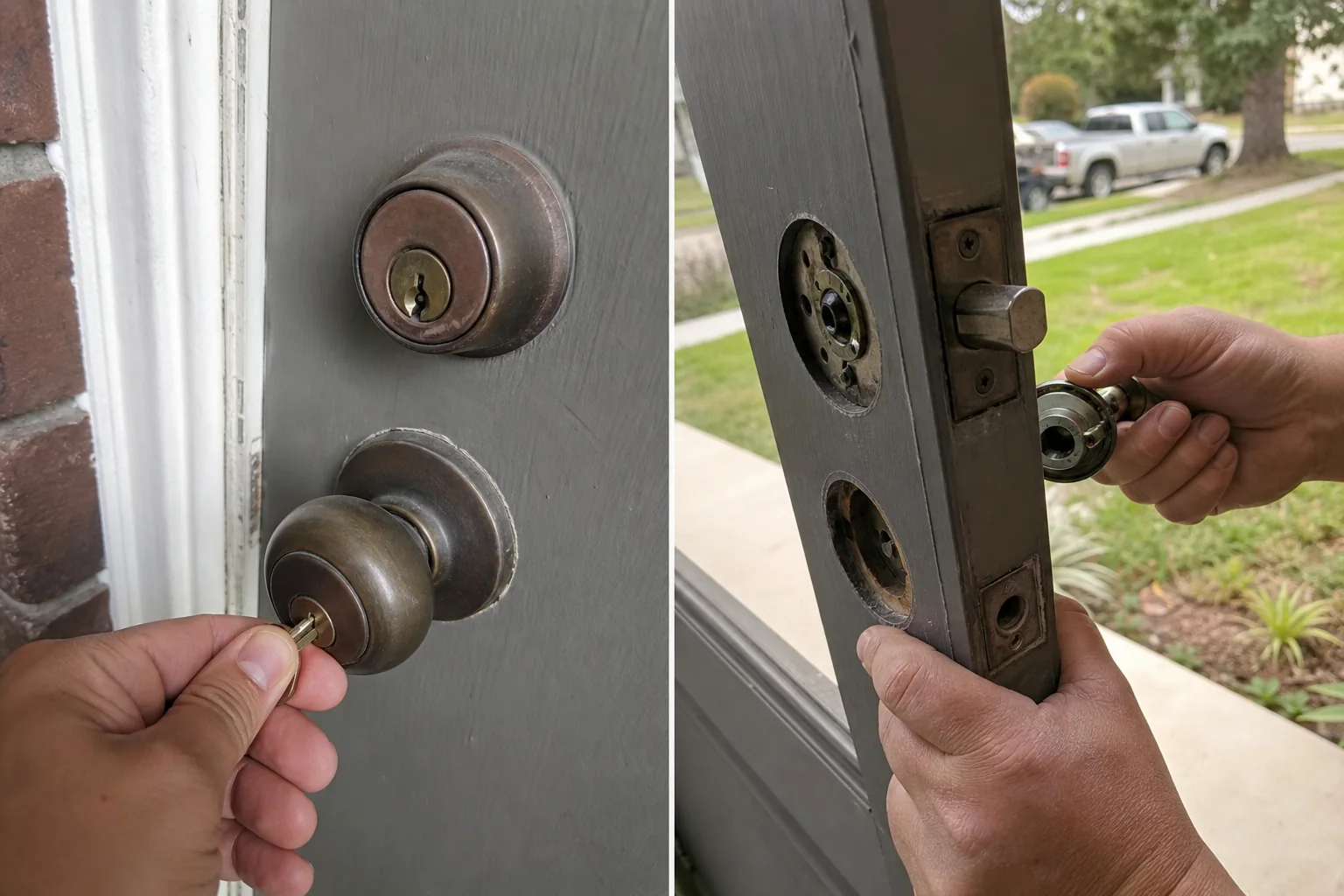
Start by testing the house lock hard to turn
Use the lock in two conditions. Keep the key under your control and avoid forcing it.
- Open the door fully.
- Lock and unlock the deadbolt with the key from outside and the thumb turn from inside.
- Close the door and repeat the same test.
- Note whether the resistance happens with the key, the thumb turn, or both.
Kwikset’s bolt-jam guidance uses the same open-door and closed-door comparison. For its lock, trouble that appears only with the door shut calls for checks of the strike area, door pressure, weather stripping, and mounting. The details vary by lock, yet the comparison is a useful starting point for a mechanical entry lock too.
Do not keep twisting a key or thumb turn that feels stuck. Stop if the key bends, the bolt won’t move, or the door cannot lock securely. A broken key or a lock that will not secure the entry changes this from an annoyance into a service call.
Match the symptom to the likely part of the door
It works easily with the door open but drags when closed
This pattern points away from the key cylinder and toward the door fit. The bolt may be meeting the edge of the strike opening rather than sliding into it. You may also feel pressure on the door while turning the thumb turn.
Look for visible clues without taking the lock apart. Check whether weather stripping is pinched or pushing hard against the door. Look at the gap around the door for an uneven space. Notice whether the door has to be pushed, pulled, lifted, or held in a certain spot before the bolt moves.
Schlage notes that temperature and moisture can temporarily affect door fit. Its troubleshooting also points to weather stripping, hinge sag, strike position, and clearance in the bolt pocket as reasons a bolt may not move smoothly. These are door and frame issues, so changing keys would not address them.
The key sticks or resists in both positions
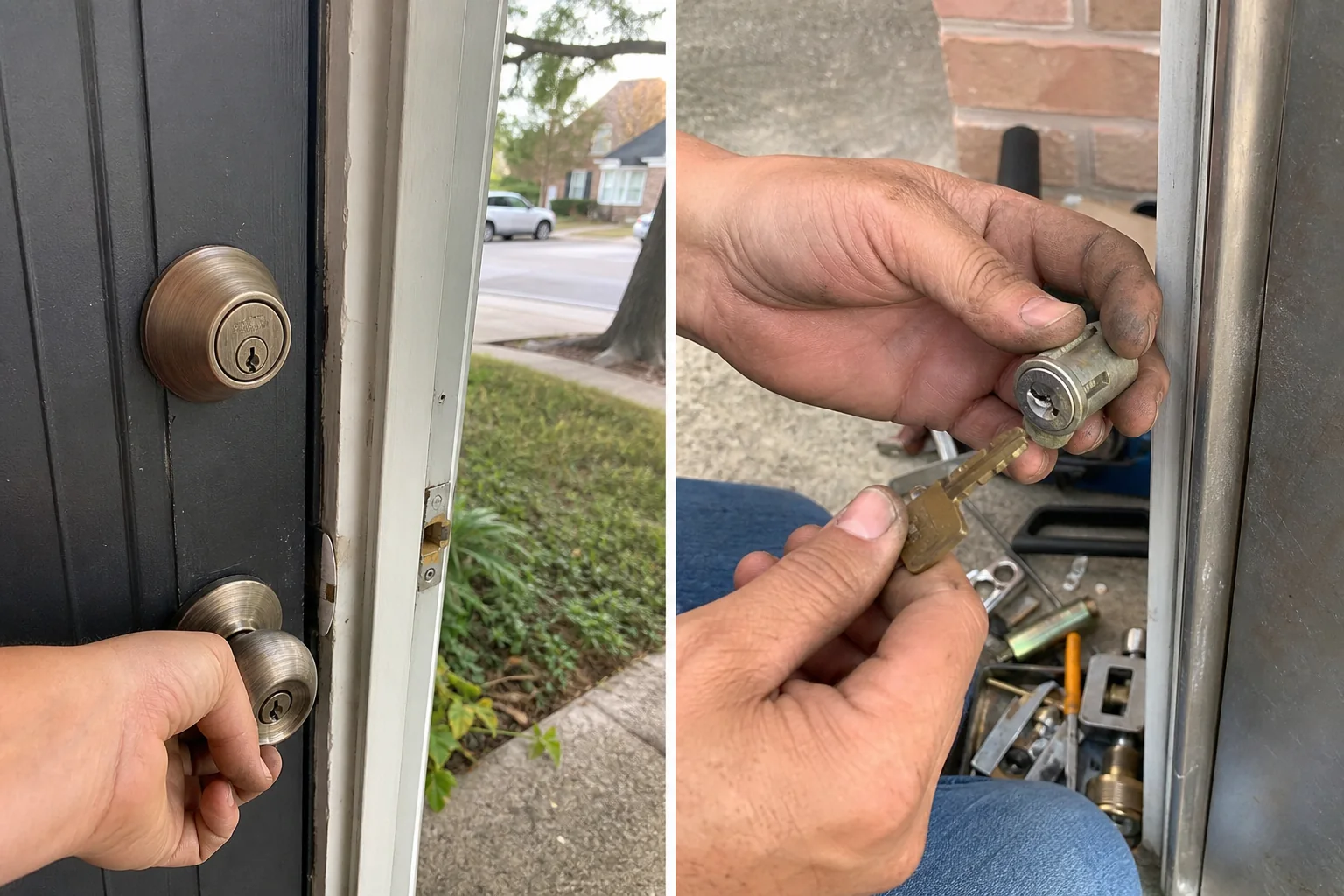
If the same key feels rough with the door open and closed, pay attention to the key and cylinder. Try a spare key if you have a current matching spare. A worn or bent key may behave differently from a cleaner spare. Do not use a key that appears cracked or badly bent.
A key that enters but will not turn smoothly can also signal a worn cylinder, which is the part inside the lock that reads the key cuts. For its used mechanical locks with a key that sticks or is hard to turn, Schlage Residential says a replacement cylinder is required. That is brand-specific guidance, but it supports having persistent key resistance assessed rather than assuming the problem is only the door.
The thumb turn is stiff but the key seems normal
A stiff inside thumb turn can involve the deadbolt, the mounting hardware, or an installation issue. If the lock was recently installed or changed, mention that when arranging service. Schlage’s mechanical troubleshooting says a new lock with an immobile key or thumb turn may have been installed in the wrong orientation.
Don’t remove screws or take apart a lock you are not prepared to reassemble. Parts can shift, and a door may be left unsecured. This is especially important on a front door, garage-entry door, apartment door, or condo door that you need to lock that day.
Choose repair when the lock can still be saved
Repair or adjustment fits a lock that is sound but being affected by its fit in the door and frame. It can also fit hardware that was mounted incorrectly or has a part that needs attention. The goal is to identify the source of the drag before changing working parts.
Bring these notes to a locksmith visit.
- Whether the bolt moves freely with the door open
- Whether pushing or pulling the door changes the feel
- Whether the issue started after weather changes, new weather stripping, painting, or door work
- Whether a spare key behaves differently
- The lock brand, if you can read it on the faceplate or key
These details help separate a door alignment problem from a cylinder or deadbolt problem. They also help avoid replacing a lock when an adjustment may be the useful next step.
If the lock needs hands-on diagnosis, Residential lock repair is the next step for checking a stiff lock, damaged hardware, or a door that will not lock smoothly.
Use rekeying for key control, not stiffness
Rekeying changes the lock so a different key operates it. It can make sense after a move, when keys are unaccounted for, or when you want to stop old keys from working. It is a key-control decision.
Rekeying does not correct a bolt that scrapes the strike, a thumb turn that binds, or a worn cylinder. If the lock is mechanically sound and the main concern is who has keys, rekeying may fit. If the lock is hard to turn, find the mechanical cause first.
For a property with several exterior doors, make a list of every lock you want addressed before scheduling. Include garage-entry doors, side doors, and doors between a home and attached spaces. Confirm who is authorized to approve changes if the home is rented, part of a condo, or managed by someone else.
Replace the lock when wear, damage, or security needs call for it
Replacement may be the better choice when the cylinder is worn, the lock hardware is damaged, a needed part is unavailable, or you want a different type of lock. It may also be considered during a security update, such as changing to a smart lock.
Replacement is not automatically the answer to every stiff lock. A new lock can still bind if the door and strike are out of line. Ask for the door fit and strike area to be checked along with the lock so the new hardware can operate properly.
Before selecting new hardware, decide what you need from the door.
- Key access, keypad access, or both
- A finish and shape that fit the existing door holes
- A lock that works with the door’s thickness and backset, which is the distance from the door edge to the center of the lock hole
- Consistent keys across doors, if that matters to your household
Keep any working keys until the work is complete. They can help identify the existing setup and let you access the home if plans change.
Know when to stop troubleshooting
Arrange service soon if you cannot lock the door, the key is damaged, the lock feels loose, or the bolt catches hard enough that you have to force it. Secure the door using another reliable entry if possible while you wait.
If someone is trapped, or there is fire or smoke, call 911 first. A lock problem can wait until emergency responders have handled the immediate danger.
Questions homeowners often ask
Can a smart lock have the same bolt problem?
Yes. A smart lock still has to move a physical bolt into the frame. If the door fit puts pressure on that bolt, the lock may struggle. Kwikset’s guidance for its Premis lock connects frequent bolt jams and slow motor sounds with checking the door and strike fit. Battery concerns should be checked using the lock maker’s instructions.
Should I use the same key after it starts sticking?
Use a current matching spare only as a brief comparison if you have one. Set aside a key that is bent, cracked, or visibly worn. Do not keep trying a key that binds, since the lock still needs attention even if another key turns more easily.
What should I tell a locksmith before the visit?
Share the door type, whether it is a front door or garage-entry door, the lock brand if known, and whether the problem occurs with the door open. A photo of the lock and strike can also help describe the setup without sharing key details.
Can a tenant change a stiff apartment lock?
Check the lease and ask the property manager before changing locks or keys. Apartment and condo doors may have building rules, shared key systems, or hardware requirements. Report a lock that will not secure the door promptly.
For help with a stiff or unreliable home lock in Houston, call Mobile Locksmith at (281) 528-1703 for residential locksmith service and tell the technician whether the lock binds with the door open, closed, or both.